
The Potential 2028 Showdown: Gavin Newsom vs. JD Vance
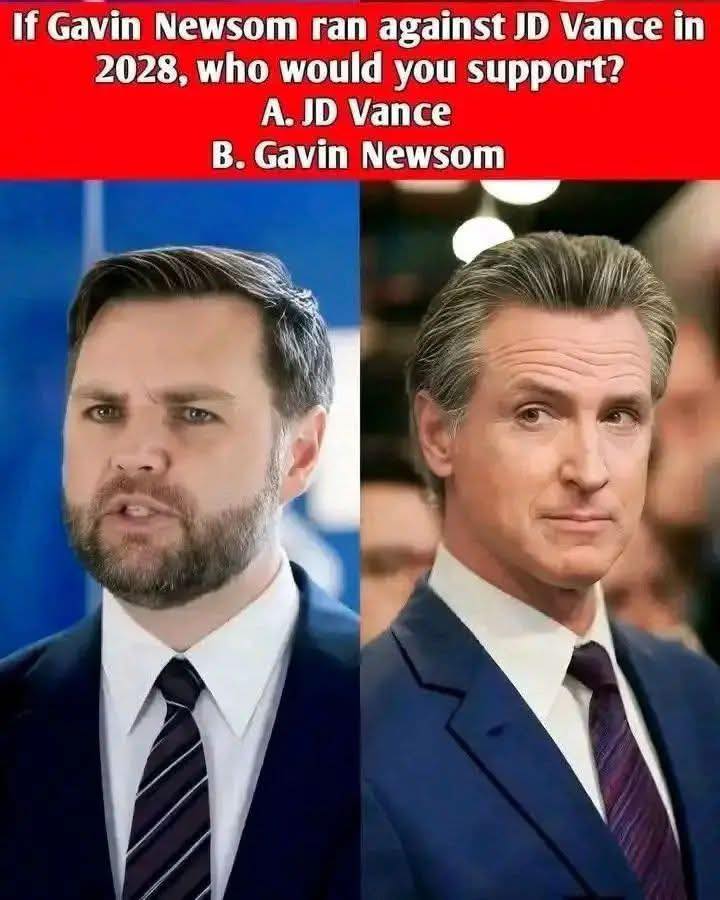 The Potential 2028 Showdown: Gavin Newsom vs. JD Vance
The image poses a provocative question about a hypothetical electoral matchup between Gavin Newsom, the Governor of California, and JD Vance, a Republican Senator from Ohio, in the 2028 presidential election. This scenario invites discussion about political identities, candidate appeal, and the evolving landscape of American politics.
Contextualizing the Candidates
Gavin Newsom
Background:
Gavin Newsom has been the Governor of California since 2019 and previously served as the Mayor of San Francisco.
A member of the Democratic Party, he is known for his progressive policies, particularly in areas such as healthcare, climate change, and social justice.
Key Policies:
Newsom has championed significant reforms, including initiatives aimed at universal healthcare access, affordable housing, and aggressive climate action.
His leadership during the COVID-19 pandemic has been both praised for health measures and criticized by opponents for restrictions placed on businesses and individuals.
Political Appeal:
As a prominent figure in the Democratic Party, Newsom appeals to progressive voters and those advocating for reform across various social issues.
His charismatic speaking style and media presence enhance his profile within national politics.
JD Vance
Background:
His platform includes strong stances on immigration, economic policy aimed at revitalizing working-class communities, and skepticism toward large technology firms.
Vance often emphasizes the need for cultural conservatism and family values, appealing to traditional Republican voters.
Political Appeal:
Vance’s story and background resonate with many voters seeking representation from someone who understands their challenges and perspectives.
His rhetoric often invokes themes of nostalgia and a return to foundational American values, attracting populist sentiments.
Implications of a Newsom vs. Vance Showdown
Electoral Dynamics
Voter Demographics:
A matchup between Newsom and Vance would showcase stark contrasts in voter bases, with Newsom likely drawing support from urban, progressive, and minority communities.
Vance would appeal to conservative, rural, and working-class voters, emphasizing issues they face in a rapidly changing socio-economic landscape.
Campaign Strategies:
Newsom’s campaign could emphasize his track record in California, advocating for progressive policies and addressing challenges like climate change and social equity.
Vance may focus on economic revitalization, family values, and opposition to “woke” culture, rallying support from traditional conservatives and those disenchanted with the status quo.
National Political Landscape
Polarization:
Issues such as healthcare, immigration, economic inequality, and climate change will shape the electoral conversation, with both candidates needing to navigate these topics thoughtfully.
The way each candidate addresses current events and national crises could significantly impact their appeal to the electorate.
Voter Engagement and Sentiment
Public Opinion:
The suitability of either candidate would prompt voters to reflect on their views concerning crucial policies and leadership styles.
The question posed in the image underscores the importance of civic participation, encouraging potential voters to think critically about who aligns with their values and priorities.
Engagement Strategies:
Engaging in discussions, attending town halls, and actively following campaign developments will enable voters to make informed choices.
The hypothetical matchup invites broader civic engagement, encouraging individuals to voice their opinions and get involved in the political process.
Conclusion
The potential presidential matchup between Gavin Newsom and JD Vance in 2028 encapsulates the evolving dynamics of American politics, characterized by stark ideological divisions and contrasting voter bases. As voters contemplate their support, they will confront pressing issues that will define the future direction of the country. This scenario serves as a powerful reminder of the importance of civic engagement, informed decision-making, and active participation in the democratic process.
Call to Action
As the political landscape continues to shift, it’s vital for citizens to remain engaged and educated on candidates and their positions. Participating in local and national discussions, seeking out diverse viewpoints, and actively voting are essential steps toward promoting a healthy democracy. Engaging with issues that matter, supporting candidates who align with one’s values, and advocating for change can contribute to a more reflective and responsive political environment.
A woman was born in 1975 and di.ed in 1975

This Little-Known Fruit Is Gaining Attention for Supporting Healthy Blood Sugar

Young man hospitalized after being penitentiated…See more
About The Author
