
Bo.dy Types: Are You Ectomorph, Mesomorph, or Endomorph
 Body Types: Are You Ectomorph, Mesomorph, or Endomorph?
Understanding your body type can be a powerful first step toward smarter fitness, nutrition, and lifestyle decisions. Many people struggle with weight gain, muscle building, or fat loss—not because they lack discipline, but because they’re following plans that don’t suit their natural body structure.
The concept of body types, also known as somatotypes, categorizes human bodies into three main groups:
What Are Body Types (Somatotypes)?
The somatotype theory was developed in the 1940s by psychologist William H. Sheldon, who classified human physiques into three general categories based on skeletal structure, muscle mass, and fat distribution.
Although modern science recognizes that genetics and metabolism are far more complex than three neat boxes, somatotypes remain a useful framework for understanding tendencies in:
Muscle gain
Fat storage
Metabolic rate
Physical performance
Think of body types as guidelines, not rigid labels.
How to Identify Your Body Type (The Wrist Test Explained)
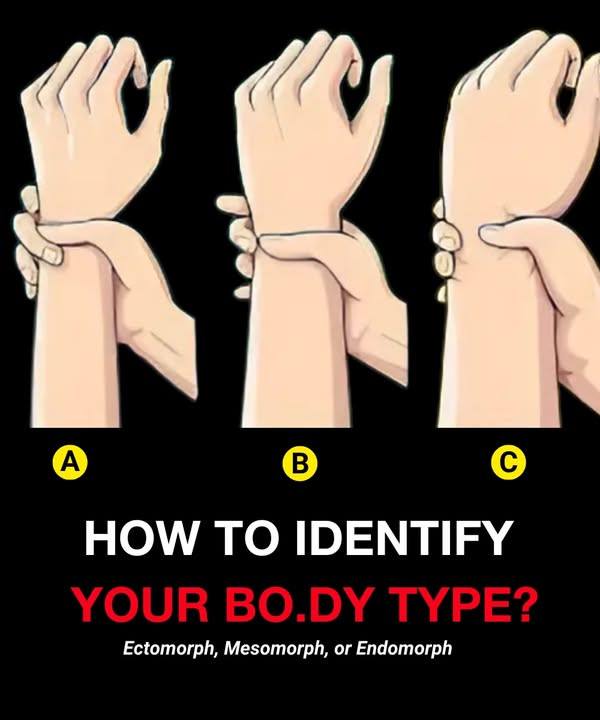
The image you shared illustrates one of the most popular and simple methods for estimating body type: the wrist circumference test.
How to Do the Wrist Test
Wrap your thumb and middle finger of one hand around the wrist of your opposite hand.
Observe how your fingers meet.
Wrist Test Results
A. Fingers Overlap → Ectomorph
If your fingers overlap easily, you likely have a small bone structure.
C. Fingers Do Not Touch → Endomorph
If your fingers cannot touch, you likely have a larger bone structure.
 Important Note:
This test reflects bone structure, not body fat or fitness level. A lean person can still be an endomorph, and an overweight person can still be a mesomorph.
Ectomorph Body Type: The Naturally Lean Frame
Key Characteristics
Slim, narrow shoulders and hips
Small joints and bone structure
Long limbs
Flat chest
Low body fat
Difficulty gaining weight or muscle
Ectomorphs are often described as “hard gainers.”
Metabolism & Genetics
Ectomorphs typically have a fast metabolism, meaning they burn calories quickly—even at rest. This makes weight gain challenging, but fat gain less likely.
Naturally lean appearance
Endurance-friendly body
Efficient energy usage
Often excel in endurance sports
Challenges
Difficulty building muscle
May look “skinny fat” without resistance training
Requires higher calorie intake
Best Training for Ectomorphs
Buy vitamins and supplements
Cheesecake
Steak
Focus: Muscle building and strength
Best Diet for Ectomorphs
Focus: Calorie surplus + nutrient density
Higher carbohydrates (50–60%)
Moderate protein
Healthy fats
Ideal Foods:
Rice, oats, potatoes
Whole milk, yogurt
Lean meats, eggs
Nuts, olive oil
Smoothies
Groceries
Eating frequently (5–6 meals/day) is often necessary.
Mesomorph Body Type: The Athletic Build
Key Characteristics
Broad shoulders, narrow waist
Medium bone structure
Naturally muscular
Gains muscle easily
Loses fat relatively easily
Mesomorphs are often considered genetically “lucky.”
Metabolism & Genetics
Mesomorphs have a balanced metabolism, making them highly responsive to training and nutrition changes.
Strengths
Muscle builds quickly
Fat loss responds well
Versatile in sports
Naturally athletic appearance
Challenges
Can gain fat if diet slips
Overconfidence can lead to inconsistency
Best Training for Mesomorphs
Focus: Balance and variety
Best Diet for Mesomorphs
Focus: Balanced macronutrients
Protein: ~30%
Carbohydrates: ~40%
Fats: ~30%
Ideal Foods:
Lean meats
Whole grains
Fruits and vegetables
Healthy fats
Groceries
Consistency matters more than extremes.
Endomorph Body Type: The Strong, Solid Frame
Key Characteristics
Wider hips and waist
Larger bone structure
Higher body fat storage
Gains weight easily
Slower metabolism
Endomorphs often feel they “gain weight just by looking at food.”
Metabolism & Genetics
Endomorphs tend to have a slower metabolic rate and higher insulin sensitivity, meaning excess calories are more likely stored as fat.
Strengths
Strong and powerful
Build muscle well
Often excel in strength sports
Challenges
Fat loss requires precision
Weight gain happens quickly
Requires stricter diet control
Best Training for Endomorphs
Focus: Fat loss + muscle retention
4–6 workouts per week
Resistance training + cardio
HIIT and circuits work well
Movement throughout the day (NEAT) is crucial.
Best Diet for Endomorphs
Focus: Calorie control + blood sugar management
Lean protein
Vegetables
Healthy fats
Whole foods
Groceries
Avoid refined sugars and processed carbs.
Mixed Body Types: The Reality for Most People
Very few individuals are purely ectomorph, mesomorph, or endomorph.
Common combinations include:
Ecto-mesomorph (lean but muscular)
Meso-endomorph (muscular with fat-gain tendency)
Your body type can also shift over time due to:
Age
Hormones
Lifestyle
Training history
Is the Body Type Theory Scientifically Perfect?
Not entirely.
Modern science emphasizes:
Genetics
Hormonal regulation
Caloric balance
Muscle fiber composition
However, somatotypes remain practically useful as a starting point, especially for beginners.
Think of body types as a map, not a prison.
Myth 2: Ectomorphs can’t build muscle
Reality: They can—it just takes more food and patience.Groceries
Myth 3: Endomorphs can’t get lean
Reality: Many elite athletes are endomorph-dominant.
Myth 4: Mesomorphs don’t need discipline
Reality: Poor habits will affect anyone.
How to Use Your Body Type Effectively
Train smarter, not harder
Adjust calories based on response
Track progress, not labels
Prioritize sleep and recovery
Stay consistent for months, not weeks
Final Thoughts
Understanding whether you lean toward an ectomorph, mesomorph, or endomorph can give you clarity, confidence, and direction—but it should never limit you.
Instead of asking:

Alex Prettis Alleged Final Words Before Passing!

United States: a world figure in music loses his life in a plane crash

The Silent Heir Speaks, Why Barron Trump 18th Birthday Revelation is Changing Everything We Knew
About The Author
